EN
EN


Wet and Dry Inflatable Water Slide Options for Rental Companies
For a rental operator, a water inflatable slide is not simply a hot-weather add-on. The right unit can support summer splash events, shoulder-season dry bookings, school functions, community days, and family parties—provided its setup, cleaning routine, and customer rules are planned from the start. This guide compares wet and dry use from a rental-business perspective, so you can choose inventory that earns across more dates without creating avoidable operational friction.
Why wet-and-dry flexibility matters to a rental fleet
Rental demand rarely follows a uniform calendar. Warm weekends may favor a water inflatable slide with a pool or splash landing, while cooler dates can still generate bookings for dry slides at school carnivals, indoor-compatible events, or fall festivals. A flexible slide helps operators avoid treating an otherwise serviceable unit as seasonal dead stock.
The comparison is not only about whether water can be added. It is about the full operating model: site access, water supply, drainage, electrical separation, staffing, cleanup time, transport weight, and the age or size profile of expected riders. When these factors are clear in a rental listing and delivery checklist, customers can select the right format earlier and crews face fewer day-of-event surprises.
Start with the event calendar, not the product photo
Before purchasing a water inflatable slide, map the bookings you want it to serve. Summer backyard parties may need a splash pool and hose access. Corporate or community events may need a larger operating area, a defined rider flow, and an attendant plan. Dry-season bookings often prioritize a visually strong slide that can operate without a wet landing area.
| Booking situation | Wet-use priority | Dry-use priority | Questions for the operator |
|---|---|---|---|
| Summer home party | High | Medium | Is there a safe hose connection, drainage path, and clear access? |
| School or community event | Medium | High | Will site rules, supervision, and setup time favor dry operation? |
| Festival or rental package | Season-dependent | High | Can one slide fit multiple package types and rider groups? |
This approach supports a consideration-stage decision: compare how each use case affects utilization and labor rather than assuming a pool-equipped slide is automatically the right commercial choice.
Wet operation: plan for more than the splash
A wet water inflatable slide can be compelling in peak heat, but it adds site conditions that a rental company should confirm before dispatch. The usable area needs to be level, clear of hazards, and large enough for the entire footprint plus safe circulation. Water runoff needs a route that does not create slippery walkways or collect around power connections. The delivery team also needs a consistent method for separating electrical cords from standing water.
Build a wet-use checklist into your booking workflow:
- Confirm a water source and hose reach before delivery.
- Confirm the surface, anchoring approach, and permitted setup area.
- Identify drainage direction and protect pedestrian routes.
- Set rider rules for age/size grouping, feet-first sliding, and one rider at a time where applicable.
- Assign supervision responsibilities and define a weather-stop procedure.
These are practical controls, not optional extras. ASTM F2374 is a recognized practice addressing the design, manufacture, operation, and maintenance of inflatable amusement devices and their operating environments. Rental companies should verify applicable local rules, insurance requirements, manufacturer instructions, and documentation for the markets they serve rather than assuming one checklist covers every location.
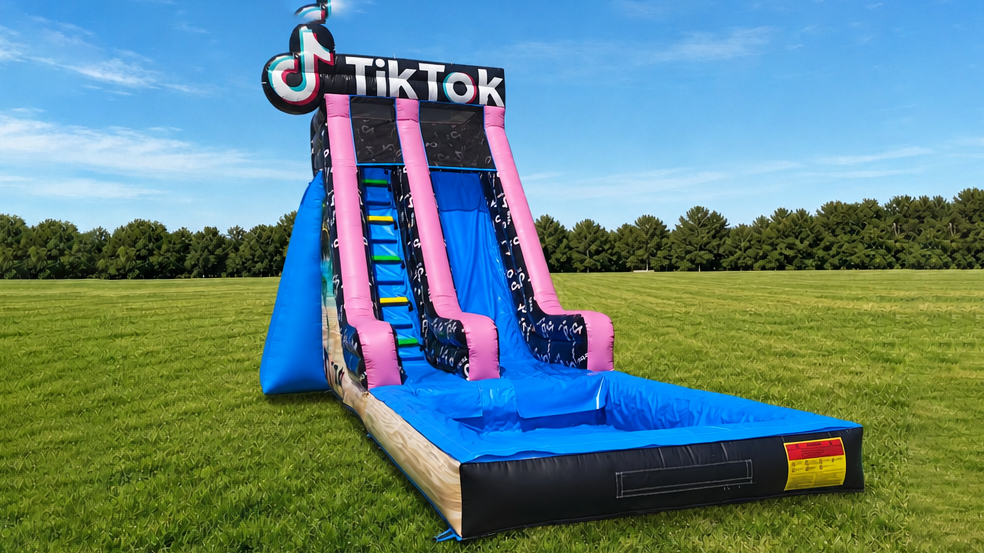 A commercial water inflatable slide should be matched to the event site and operating plan.
Dry operation: protect booking flexibility and turnaround time
Dry use can extend the earning window for a water inflatable slide, especially when customers want the visual impact of a tall slide without water logistics. It may reduce the need for a hose connection and drainage planning, but it does not remove the need for correct anchoring, blower placement, clear rider rules, or active supervision.
For the rental team, dry operation can also simplify turnaround after an event. Fewer wet surfaces can mean a more predictable pack-down process, but every unit still needs inspection, cleaning, and drying according to its material and manufacturer guidance. Do not market a wet-and-dry configuration as “maintenance-free”; instead, explain the operating choice and the preparation customers should expect.
Compare commercial suitability, not just slide height
Online results for water slides mix commercial catalog pages with consumer backyard listings. That makes it important to compare a water inflatable slide against your rental requirements rather than against an attractive retail price. Ask suppliers for the details that support your own evaluation: intended operating use, installation guidance, anchor points, blower requirements, rider limits, maintenance instructions, repair support, and packing information.
Also consider how the design supports your actual rental workflow. A pool landing may be appropriate for warm-season demand; a dry-capable layout may better serve mixed calendars. Entrance and exit routing, visibility for attendants, and practical cleaning access can have as much influence on repeat bookings as the exterior theme.
A product-page example for your shortlist
When reviewing a wet-use option, keep the product record connected to the operational questions above. For example, this Commercial Blue Inflatable Waterslide with Swimming Pool Giant Inflatable Water Slide for Kids Adults can be evaluated as a product candidate alongside your required site, rider-flow, cleaning, and seasonal-use criteria. Confirm the final specifications and operating instructions directly with the supplier before adding any unit to your fleet.
Build a purchase checklist around repeatable rental operations
- Match demand: Review last season’s hot-weather, dry-event, and mixed-use bookings.
- Check sites: Define your minimum footprint, access route, power, water, and drainage requirements.
- Review operating documentation: Request installation, maintenance, rider-rule, and inspection guidance.
- Plan labor: Price delivery, setup, cleaning, drying, inspection, and pack-down into each package.
- Prepare customer communication: Send wet/dry requirements, weather terms, and supervision expectations before the event.
- Test the workflow: Run an internal setup and cleaning drill before the first high-volume weekend.
Rental manager quick-reference checks
Use this short review before each quotation so wet and dry choices remain consistent across your team.
- Confirm that the water inflatable slide fits the booked footprint before promising delivery; record the water inflatable slide access route on the work order.
- For a wet booking, verify the water inflatable slide has a workable water source; verify the water inflatable slide drainage route at the same time.
- For a dry booking, state that the water inflatable slide will operate without water; still inspect the water inflatable slide setup surface and anchoring plan.
- Ask the customer who will supervise the water inflatable slide; give that person the water inflatable slide rider rules before the event begins.
- Schedule cleaning time after a wet water inflatable slide booking; schedule inspection time after every water inflatable slide booking.
- Keep cords separated from runoff around the water inflatable slide; keep walkways clear around the water inflatable slide exit area.
- Match rider groups to the water inflatable slide instructions; do not exceed the water inflatable slide operating limits supplied by the manufacturer.
- During a weather change, pause the water inflatable slide operation when conditions require it; communicate the water inflatable slide stop policy in advance.
- At pack-down, inspect the water inflatable slide for debris and moisture; document any water inflatable slide repair need before the next dispatch.
- When pricing, include the water inflatable slide setup labor; include water inflatable slide cleaning and drying labor where wet use is selected.
Make the wet-or-dry choice easy for customers
The most profitable water inflatable slide program is one customers can understand quickly and crews can execute consistently. Offer clear package descriptions for wet and dry operation, state what the site must provide, and use a pre-event confirmation that captures water, surface, access, and weather details. This reduces last-minute changes while helping customers choose a format that suits their event.
For rental companies serving North America and Europe, a versatile slide can support seasonal promotions without forcing every booking into the same operating model. The key is not claiming that every unit works everywhere; it is matching the product, site, procedure, and supervision plan before delivery. That is how a wet-and-dry slide becomes a practical fleet asset rather than a short summer novelty.