EN
EN


Inflatable Water Slide Types for Events and Rental Fleets
For a rental operator or event planner, choosing a waterslide is not simply a matter of picking the tallest unit or the brightest theme. The right inflatable water slide needs to fit the guest mix, venue footprint, delivery plan, supervision model, and the kind of bookings a fleet expects to serve. That is why commercial buyers benefit from sorting waterslide types by operating scenario before comparing individual designs.
Broad online searches for a waterslide often lead to backyard products. Commercial planning is different. A rental fleet needs equipment that can work across repeat events, support clear rider flow, and be evaluated alongside local rules, manufacturer instructions, anchoring requirements, and water-management conditions.
Why waterslide type matters in commercial planning
A waterslide category tells you more than its appearance. It helps a buyer anticipate where the unit fits: a neighborhood birthday party, a school field day, a community festival, or a larger temporary attraction. It also shapes practical questions such as loading access, setup space, splash-zone control, staffing, turnaround time, and whether the booking calls for a younger-child experience or a higher-energy challenge.
For commercial inflatable amusement devices, ASTM F2374 is one recognized reference covering land-based units intended for dry, wet, or combined use. It is not a substitute for local requirements, insurance conditions, or the manufacturer’s operating instructions. Instead, it is a useful reminder that product selection and safe operation belong in the same conversation.
Single-lane waterslides for focused, compact bookings
A single-lane waterslide gives one rider a clear route from the climbing section to the landing area. This format can suit smaller outdoor events, birthday packages, and venues where the layout needs a straightforward queue and exit pattern. For rental fleets, it can provide a versatile base category because staff can explain the rider flow easily and position supervision around one primary lane.
When comparing a single-lane waterslide, look beyond the slide height. Map the complete operating footprint, including blower access, anchor points, the water connection, the landing or pool area, exit clearance, and a safe path for waiting riders. A compact footprint can still need thoughtful drainage planning when the event surface is grass, pavement, or another site-specific material.
Dual-lane waterslides for faster event throughput
Dual-lane waterslides create two parallel rider paths. Their appeal for festivals, school events, and busy rental windows is not just the racing visual; it is the potential to keep a larger group engaged when the queue is managed well. They can be a sensible format when an operator expects high guest turnover and has enough space to separate entrances, exits, and viewing areas.
The trade-off is operational complexity. Two lanes require clear instructions about rider spacing, lane entry, and how guests clear the landing zone. Before adding a dual-lane waterslide to inventory, decide who will monitor the top, who will watch the bottom, and how the event plan prevents a new rider from starting before the previous rider has exited.
Waterslide-and-pool combinations for wet-play centers
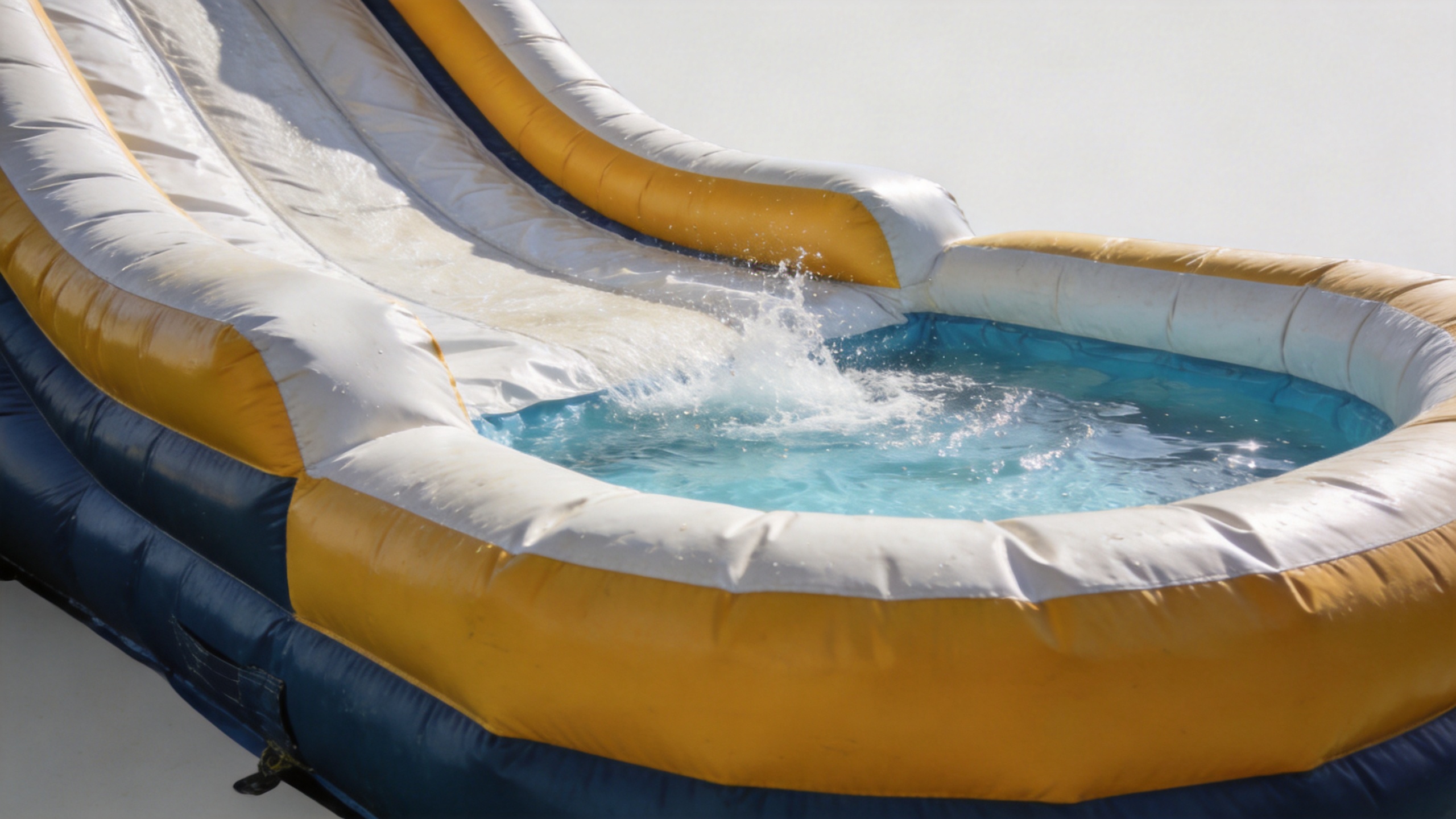
Many inflatable waterslide designs finish in a splash pool or a contained landing pool. This category can make the attraction feel like a complete water-play destination for summer parties and family events. The pool format also calls for more deliberate site preparation: operators need to plan water supply, runoff, cleaning, rider exit behavior, and the different abilities of guests around shallow water.
For buyers who want a concrete example of the category, Dream Kiddie Toys lists a Commercial Blue Inflatable Waterslide with Swimming Pool. The product page is a useful starting point for discussing a waterslide-and-pool layout with a supplier; final selection should be based on the confirmed product documentation and the planned operating environment.
Inflatable water parks and obstacle-slide combinations
Some bookings need more than one descent lane. Water-park-style inflatables and obstacle-slide combinations combine climbing, sliding, splash elements, and challenge features into a longer guest journey. These formats can fit event planners creating a focal attraction for a community day, resort activity, camp program, or ticketed attraction.
Because the guest route is more complex, buyers should review entry and exit control early. Ask how the queue will be staged, where staff can see each transition, and whether participants can move safely away from the slide exit before the next group arrives. A larger format is not automatically a better fit; it needs a venue plan that supports its flow.
Theme-led waterslides for event presentation
Theme-led units use color, shapes, and decorative features to support a party concept or seasonal promotion. For rental businesses, themes can help merchandise a package for younger children, school celebrations, or local events. For distributors, a balanced range of themes can make it easier for customers to match inventory to their own market without treating every booking as a custom project.
Keep the operational questions separate from the visual questions. A themed waterslide still needs the same checks for usable space, access, water routing, anchoring, inspection, and supervision. A strong presentation supports the event while allowing safety messaging and rider rules to remain easy to see.
How to compare waterslide formats without treating them as interchangeable
Use a short comparison sheet for every waterslide candidate. Record the intended age range from the manufacturer, the full operating footprint, the water connection, the landing design, and the recommended supervision plan. A waterslide that is easy to sell for a summer party may not be the same waterslide that supports a long festival queue. Similarly, a tall waterslide can be visually compelling while a lower, more compact waterslide may fit more of the sites your rental team serves.
For each waterslide format, ask where riders wait, how they climb, where they land, and how quickly they can leave the waterslide area. These observations turn a waterslide comparison into a usable event plan. They also help distributors present each waterslide as a category with an intended operating role rather than a generic seasonal item.
A practical selection checklist for rental inventory
- Start with booking patterns: Identify whether your typical customer is a family party, school, festival, camp, or event-planning business.
- Match the rider flow to the format: A single lane, dual lane, pool combination, and obstacle layout each need a different queue and exit plan.
- Confirm the complete footprint: Include access, blower placement, anchoring, water supply, runoff, and spectator separation—not only the inflatable’s stated dimensions.
- Review operating documents: Use the manufacturer’s instructions and applicable local requirements to define setup, inspection, rider limits, and supervision.
- Plan maintenance between bookings: A fleet category should be judged by how reliably it can be cleaned, dried, checked, packed, transported, and prepared for its next event.
Build a waterslide mix around real operating scenarios
A useful rental inventory rarely depends on one universal waterslide. Many operators benefit from a mix: a straightforward single-lane option for compact parties, a dual-lane unit for higher-energy group events, a pool combination for summer bookings, and a larger water-play format for venues that can support it. The mix should follow the audience and event opportunities you actually serve, rather than a consumer-style shopping list.
For distributors, rental companies, and event planners, the most productive next step is to define the target booking, map the site, and compare confirmed product information against the operating plan. That process makes it easier to choose an inflatable waterslide category that is exciting for guests and manageable for the team responsible for it.