EN
EN


How to Choose a Giant Inflatable Water Slide for Commercial Events
For an event planner, rental operator, or distributor, choosing the biggest inflatable water slide is not simply a matter of picking the tallest unit in a catalog. The right slide must fit the venue, the expected rider mix, the operating plan, and the delivery route. A visually impressive slide can help an event stand out, but it only works when the site can support safe installation, controlled rider flow, water use, and teardown.
This guide turns a broad “bigger is better” brief into a practical buying checklist. It is written for commercial events such as festivals, resort programs, school or community days, rental fleets, and large outdoor promotions.
Start with the event, not the slide height
A biggest inflatable water slide may be a strong fit for a high-visibility event, but size should follow the event objective. Begin with three questions: How many riders are likely to use the attraction at peak times? What age and size range will they be? Is the goal fast turnover, a premium visual centerpiece, or a mix of both?
For a family event, separating smaller children from teens and adults is often more useful than simply adding height. For a rental business, a giant inflatable water slide that serves a clear customer segment can be easier to market and schedule than an extreme unit that only suits a few sites. Where queues are expected, a dual-lane layout may improve flow, while a single-lane slide may suit a tighter program with lower attendance.
Measure the full operating footprint
Do not approve a biggest inflatable water slide from a product photo alone. Ask for the inflated length, width, height, landing or pool area, blower positions, anchor points, and the clear area required around the unit. Then map those dimensions against the event site.
- Surface: Confirm that the area is level, clear of sharp debris, and suitable for the manufacturer-approved anchoring method.
- Access: Check gates, paths, loading zones, turning space, and the route from the vehicle to the setup point.
- Water and drainage: Plan the hose connection, run-off direction, splash-pool management, and protection for nearby electrical equipment.
- Power: Identify the required electrical supply and where blowers can be positioned without creating a trip hazard or blocking access.
- Weather plan: Establish who monitors local conditions and who has authority to pause operation when the supplier’s operating instructions require it.
Large models may arrive in more than one section and require a more deliberate load-in plan. That is not a drawback; it is a reason to treat logistics as a selection criterion before committing to the biggest inflatable water slide.
Match slide design to rider flow
The biggest inflatable water slide for a commercial event should support orderly use, not just attract attention. Compare lane count, climb design, platform access, splash area, and exit route. A design with an obvious entry and exit can make supervision easier during busy periods.
| Event need | What to compare | Buyer check |
|---|---|---|
| High throughput | Lane count and landing reset time | How will attendants release riders and clear the exit? |
| Mixed-age audience | Rider restrictions and slide profile | Can younger and older participants be scheduled separately? |
| Strong visual impact | Height, theme, and sightline | Does the tall profile suit the venue without conflicting with local limits? |
| Recurring rental use | Setup, transport, cleaning, and storage workflow | Can the crew handle the unit consistently between events? |
Do not assume a larger unit automatically handles more riders. The actual experience depends on operating rules, attendants, rider behavior, and how quickly the landing area is cleared.
Evaluate construction and supplier information carefully
Commercial buyers should request the exact documentation that applies to the model and destination market. That can include the manufacturer’s setup instructions, rider guidance, repair and maintenance information, anchoring guidance, electrical requirements, and any applicable compliance documentation. Local rules, venue rules, and insurer requirements may add further obligations.
When comparing a giant inflatable water slide, use a consistent supplier questionnaire rather than relying on generic claims. Ask what is included, what must be sourced locally, which items are consumable or serviceable, how replacement parts are handled, and what information the supplier needs to recommend an appropriate configuration.
Build supervision into the purchase decision
A commercial biggest inflatable water slide needs an operating plan before it opens. Assign trained attendants, establish rider rules, keep access and exits clear, and confirm the procedure for stopping use. The event team should understand the manufacturer’s instructions and adapt staffing to the audience, queue length, and site conditions.
Useful planning details include wristband or timed-entry control, a visible age or height policy where applicable, a clear “one rider at a time” process when required, and a dry path for people leaving the splash zone. These controls are not add-ons; they shape whether a given slide is commercially practical for the event.
Use a final commercial selection checklist
- Define peak attendance, target riders, and the event’s desired visual impact.
- Obtain the complete footprint, access, anchoring, power, water, and drainage requirements.
- Compare lane layout and rider-flow features against the staffing plan.
- Verify model-specific documentation and destination-market requirements with the supplier and venue.
- Confirm delivery, installation, cleaning, storage, and service responsibilities.
- Choose the configuration that your site and team can operate reliably—not just the tallest option.
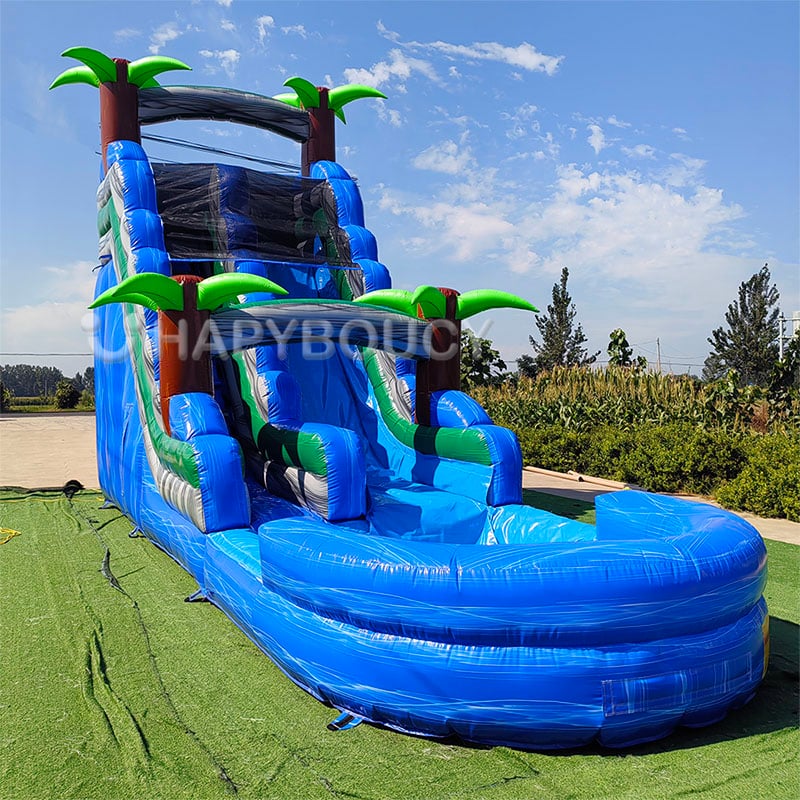
For buyers seeking a product example to discuss with a supplier, review this commercial blue inflatable waterslide with swimming pool alongside your own site dimensions and event requirements. The right giant inflatable water slide combines attraction value with a workable commercial operating plan.