EN
EN


How to Choose a Commercial Water Slide for a Rental Fleet
A commercial water slide can be a high-visibility addition to a party-rental lineup, but the right choice is not simply the tallest unit or the lowest quoted price. For a rental operator, every commercial water slide must earn space on the truck, fit the events you serve, and stay manageable between busy weekends. The practical question is whether a unit supports repeatable setup, safe operation, cleaning, storage, and profitable bookings.
This guide gives rental businesses a comparison framework for choosing a commercial water slide. It focuses on event demand, transport planning, fleet mix, maintenance readiness, and questions to put to a supplier before ordering.
Start with the events your fleet actually serves
Match each commercial water slide to a booking pattern before comparing colors or themes. A compact single-lane unit may suit backyard parties and smaller venues, while a large water slide can make more sense for school events, community days, resort programs, or larger corporate gatherings. The right mix depends on your service area, local venue access, crew size, and the age groups that account for most of your bookings.
- Backyard and residential rentals: prioritize practical footprint, straightforward access, and efficient turnaround.
- School, church, and community events: assess throughput, supervision needs, and whether the venue has sufficient setup space.
- Festival and seasonal attraction work: consider whether a large water slide creates enough visual impact and revenue potential to justify the logistics.
- Mixed-age bookings: plan for the stated user guidance and an operating setup that helps staff keep use organized.
Rather than buying several similar units, many operators build a ladder of options: an accessible everyday slide, a mid-range feature unit, and a large water slide for premium bookings. This gives sales teams a clearer upgrade path without forcing the same equipment into every event.
Compare size as an operating cost, not just an attraction feature
Height and length influence more than guest appeal. They affect trailer or truck space, loading time, crew requirements, venue clearance, and the time needed for drying and storage. When assessing a commercial water slide, make a simple route map from warehouse to venue: loading bay, vehicle, driveway or gate, setup surface, water connection, and return route.
Ask suppliers for packed dimensions, unit weight, recommended blower arrangement, setup footprint, and user guidance. Then compare those details to the equipment you already transport. A unit that looks like a strong revenue opportunity can become costly if it regularly requires a second vehicle, creates difficult access at common venues, or slows the crew at the end of a long rental day.
| Fleet question | What to compare | Why it matters |
|---|---|---|
| Can it fit the regular route? | Packed size, weight, loading method | Protects delivery efficiency and crew capacity. |
| Can typical venues host it? | Inflated footprint, height, access path | Reduces last-minute site conflicts. |
| Does it fit the booking tier? | Visual impact, lane layout, event capacity | Helps align the unit with a sellable price point. |
| What happens after use? | Drainage, cleaning access, drying plan | Supports a dependable next-day turnaround. |
Build a fleet mix instead of buying one all-purpose commercial water slide
Rental demand changes by season, weather, and local event calendars. A balanced fleet usually performs better than a collection of units that all target the same booking. Compare a commercial water slide against the jobs it can win, the dates it may overlap with other equipment, and the upsell packages it can support.
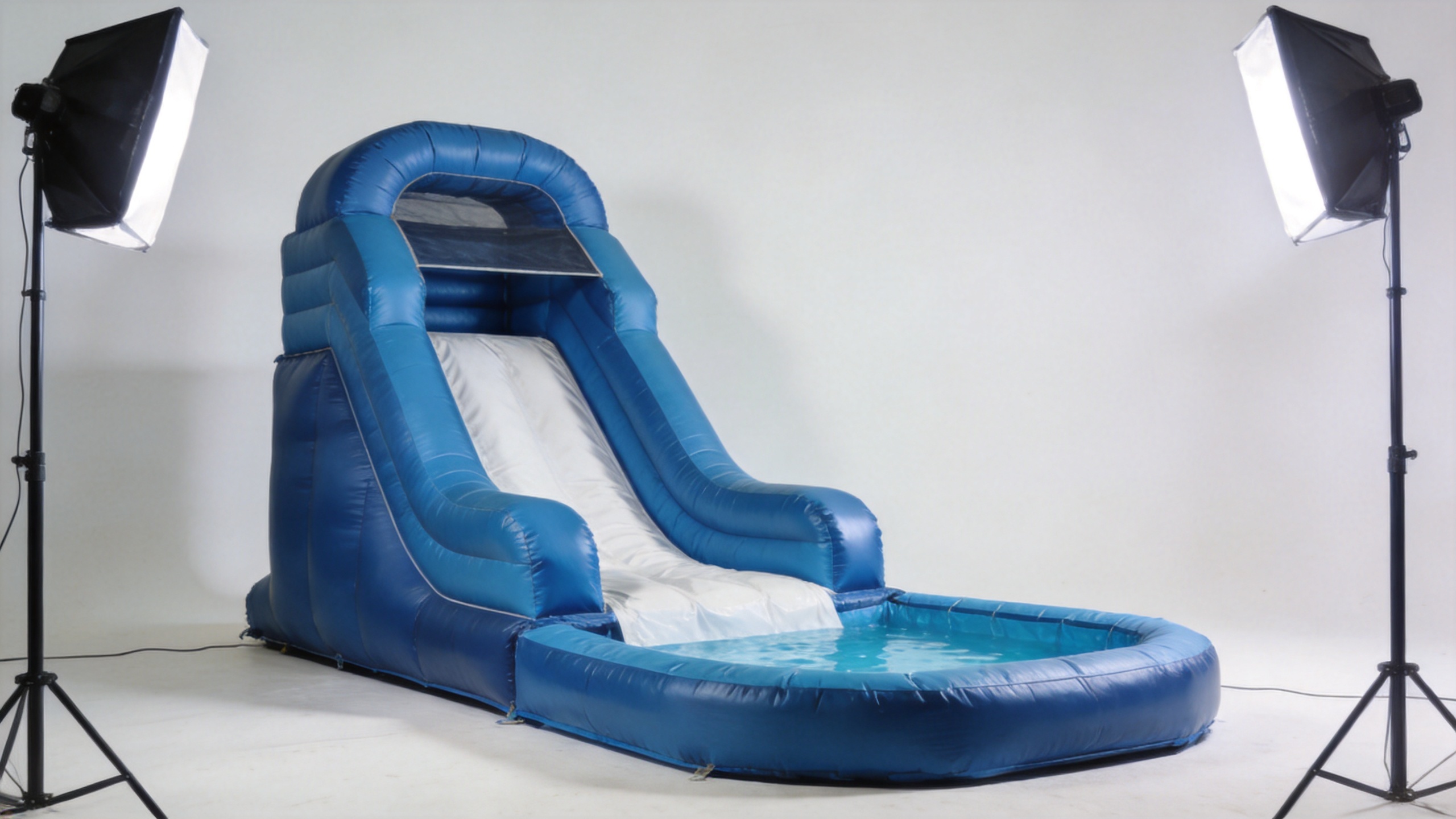
For example, a visually distinctive blue pool slide can be evaluated as one option in a water-rental assortment. Review the confirmed product page for the Commercial Blue Inflatable Waterslide with Swimming Pool Giant Inflatable Water Slide for Kids Adults alongside its actual packing, operating, and venue-fit details. Do not assume that a larger model is automatically the stronger fleet choice; the useful choice is the one that matches your order mix and operating capacity.
When planning fleet combinations, consider how a commercial water slide pairs with dry slides, bounce houses, obstacle courses, and event-service packages already in your catalog. A connected sales story can be more valuable than a unit that is impressive but difficult to bundle.
Make safety and maintenance questions part of procurement
Commercial selection should include an operating-readiness review. ASTM F2374-22 covers criteria related to the design, manufacture, installation, operation, maintenance, inspection, training, and auditing of commercial inflatable amusement devices. ASTM F770-23 addresses owner/operator procedures for operation, maintenance, and inspection of amusement rides and devices. These references are useful for building a supplier-question checklist and a documented internal process; they are not a substitute for checking the rules, permits, insurance requirements, and inspection expectations that apply in each market.
Before adding a commercial water slide, clarify who will inspect it, how crews will record condition, how wet equipment will be cleaned and dried, and what happens when a unit needs repair. A simple pre-season review and a repeatable post-rental checklist help the fleet remain usable during peak demand.
- Request the supplier’s operating, anchoring, inspection, cleaning, and repair guidance.
- Confirm the documentation your local authority, insurer, and venues may require.
- Set a check-in process for seams, attachment points, blower connections, and water-management components.
- Plan a dry, organized storage area so wet equipment is not returned to service without proper turnaround.
Use a supplier comparison sheet before placing an order
A strong purchasing decision comes from comparable answers, not vague assurances. Send the same list of questions to each supplier and record the answer in one sheet. For every commercial water slide, include the product reference, packed and inflated dimensions, materials stated by the supplier, operating guidance, included accessories, lead time, spare-part availability, warranty terms, and photo or video confirmation of the exact configuration.
For rental operators in North America and Europe, it is also useful to ask how documentation supports the market where the unit will be used. Keep the focus on verifiable product and operating information. If a supplier mentions a standard or certification, ask for the applicable document rather than treating a sales statement as proof.
Choose the commercial water slide that supports repeat bookings
A suitable commercial water slide for a rental fleet is the model that fits a defined booking tier, can move through your normal delivery workflow, and can be inspected, cleaned, dried, and stored without disrupting the rest of the operation. Start with your event types and transport constraints, then compare fleet role, operating process, and supplier documentation.
With that approach, a large water slide becomes a deliberate premium-fleet decision rather than an impulse purchase. The result is a more flexible lineup that helps rental businesses quote confidently, serve varied events, and prepare for the next busy season.