EN
EN


Dual-Lane vs Single-Lane Inflatable Water Slides for Events
For an event planner, rental operator, or distributor, choosing a dual lane inflatable water slide is not simply a question of adding another lane. The right configuration depends on how guests arrive, how much clear operating space the site provides, and whether the event needs a fast, social activity or a compact attraction that is easier to place. A single-lane inflatable water slide can be the better fit for a small footprint or a mixed event layout; a dual-lane model can make more sense when side-by-side participation and a steady queue are central to the plan.
Start with the event rhythm rather than a product photo. A school celebration, resort activity day, municipal festival, or rental package all place different demands on entry flow, supervision, setup access, and the space around the slide. This comparison gives commercial buyers a practical way to decide.
What Changes When You Choose a Dual Lane?
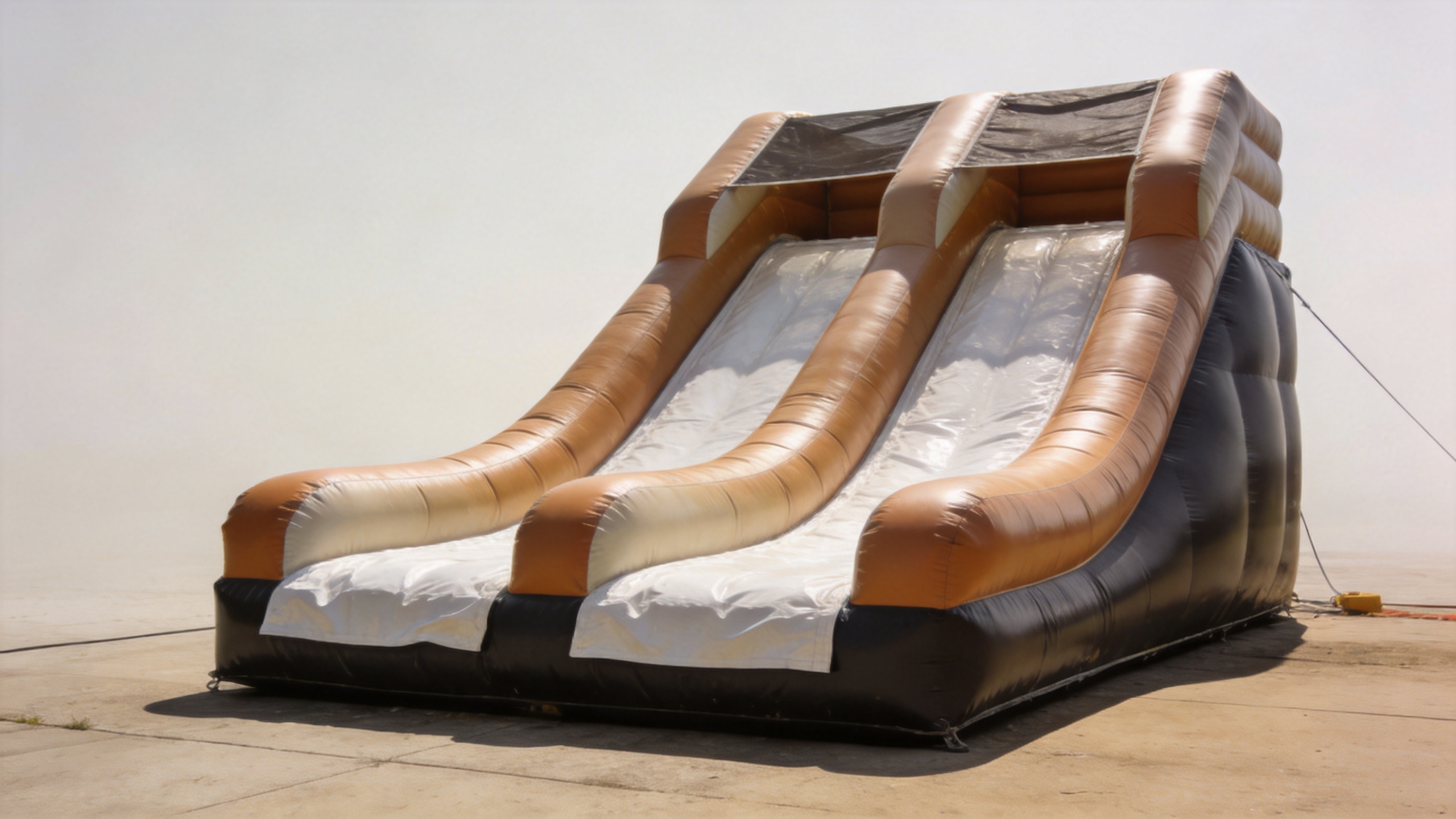
A dual lane inflatable water slide gives two participants parallel lanes, so it naturally supports racing, sibling play, and group interaction. That visual energy can be useful at events where the attraction needs to draw attention and keep guests engaged. It can also help an operator manage a busy period: two riders can complete a run in the same operating cycle instead of one.
That does not mean “two lanes” automatically equals twice the event capacity. Actual flow still depends on how quickly riders are admitted, the rules for the activity, the time needed to clear the landing area, and the available supervision. The benefit is strongest when the queue is continuous and the team has a clear process for entry and exit.
A single-lane inflatable water slide creates a simpler, more linear experience. For birthday events, smaller venues, or a site that already has several attractions, one lane may be enough to provide a strong water-play feature without making the layout feel crowded. It also gives planners a clearer way to separate the queue, slide path, splash area, and spectator space.
Compare Participant Flow, Queue Design, and Event Pace
Use participant flow as the first decision filter. A dual-lane layout is often appropriate when an event expects clusters of children or families to arrive at the attraction at the same time. Side-by-side runs give the activity a shared, competitive feel and can reduce the perception of a slow line during peak periods. For a rental business, that can be a useful feature in a package designed around high-energy backyard parties or community events.
However, more lanes call for more deliberate operating coordination. Plan where riders wait, where they leave the landing area, and how staff keep the two lanes moving without crossing traffic. If staff availability is limited, a single lane may be easier to monitor consistently. The selection should support the operating plan, not create a process that the event team cannot comfortably manage.
| Decision factor | Single-lane slide | Dual-lane slide |
|---|---|---|
| Participation style | Individual turns and a simpler ride sequence | Parallel play, racing, and group interaction |
| Peak-event flow | Suitable for moderate demand or a multi-attraction layout | Useful when the queue is a major part of the event plan |
| Site planning | Often easier to position in compact layouts | Needs enough clear width and circulation around the unit |
| Operations | Simpler entry and rider monitoring pattern | Requires a defined process for two riders and lane clearance |
| Experience | Focused slide experience | More social and competitive event energy |
Measure the Whole Operating Footprint, Not Just the Slide
A common purchasing mistake is comparing only the stated size of the inflatable. Every inflatable water slide also needs room for anchoring, blower placement, hose routing where applicable, entry and exit circulation, and a safe separation from obstacles. The surface should be flat and even, and the unit should be positioned according to the manufacturer’s setup instructions and the requirements that apply locally.
A dual-lane unit generally asks for more planning across the width of the event zone. That extra space may be worthwhile if the slide is the headline attraction. It may be less practical when the site must also accommodate tents, food service, seating, generators, parking access, or other inflatables. Before asking for a quotation, map the usable event area and identify access routes for delivery, inflation, and teardown.
If your layout has a narrow but long activity zone, a single lane can be the more efficient option. If you have a generous open area and want to make water play a visible focal point, a dual lane inflatable water slide can justify the additional footprint by creating a more active visual center.
Match the Slide Configuration to Your Event Format
For short, high-traffic festivals, dual lanes are usually worth evaluating because shared play can keep the attraction lively. For a rental operator assembling a premium party package, a dual-lane model can be positioned as a group-play option rather than as a universal upgrade. For smaller private events, a single lane can be the practical choice when budget, access, or available space matters more than racing.
Buyers should also think about the audience mix. Younger riders, older children, and family groups may need different supervision, rider rules, and queue communication. Confirm the supplier’s guidance on intended use, setup, anchoring, blower requirements, water use, and care procedures before finalizing the configuration. Do not assume that one product’s details apply to another model.
For examples of commercial water-slide configurations, you can review the White Inflatable Water Slide Dual Lane Inflatable Waterslide with Pool Wet Dry Inflatable Slide with Blower and the Commercial Blue Inflatable Waterslide with Swimming Pool Giant Inflatable Water Slide for Kids Adults. Review the current product details with the supplier before using either option in an event plan.
A Buyer Checklist Before You Commit
- Estimate peak participation periods instead of using total guest count alone.
- Measure the clear operating area, including queue, exit, blower, anchoring, and access space.
- Decide whether the event benefits more from a race-style activity or a compact single-rider attraction.
- Confirm site surface conditions, water access, drainage considerations, and local operating requirements.
- Ask for the exact model’s dimensions, setup instructions, rider guidance, and included equipment.
- Plan supervision and queue communication before the event opens.
The Practical Choice
The right dual lane inflatable water slide choice is the one that matches your event’s real operating conditions. Choose dual lanes when parallel participation, visible energy, and a well-managed high-demand attraction matter most. Choose a single lane when site efficiency, simpler supervision, or a balanced event layout is the priority. A clear site plan and model-specific supplier information will make the comparison far more useful than selecting by lane count alone.