EN
EN


Bounce House Blower Basics for Event Operators
For an event operator, a bounce house blower is not an accessory to think about after the inflatable arrives on site. It is the continuous-airflow unit that helps the attraction take shape and stay properly inflated while it is in use. A reliable event setup starts by treating the blower, inflation tube, power source, anchoring plan, and the inflatable’s own label as one working system.
This overview is written for planners, rental teams, and commercial inflatable buyers. It does not replace the unit manual, local requirements, or a site-specific risk assessment. Instead, it gives your team a practical way to ask the right questions before a bounce house fan is switched on.
What a Bounce House Blower Does During an Event
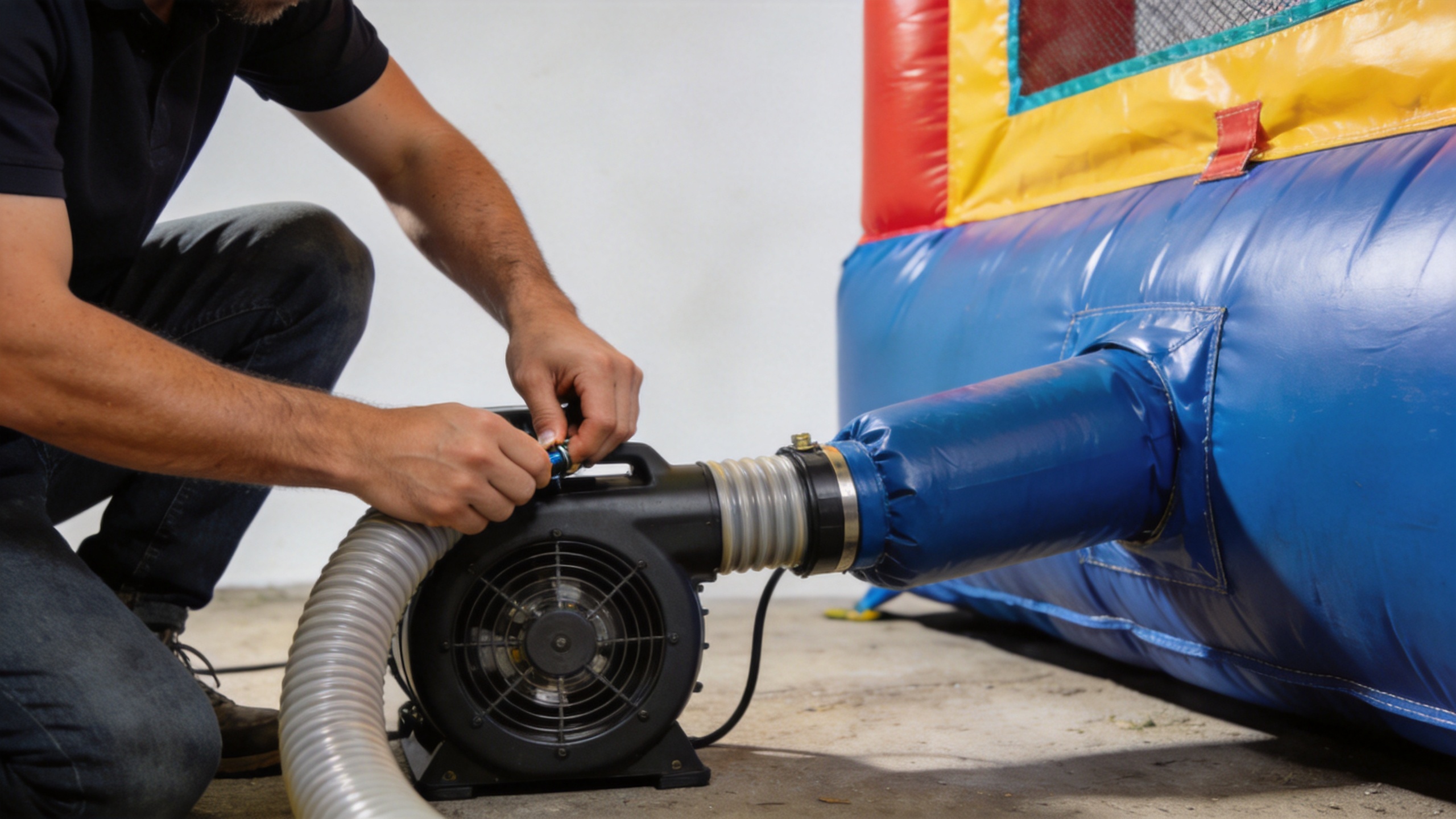
A bounce house blower continuously moves air into the inflatable through its inflation tube. Commercial inflatables are designed around this ongoing airflow, so the blower normally remains running while the unit is operating. The goal is not simply to make the structure look full at the start; it is to maintain the intended shape while supervised participants use it.
That distinction changes how operators prepare. Before comparing a single blower feature, first verify the unit’s specified blower requirement, tube connection, electrical supply, anchoring method, and operating conditions. A higher-rated blower is not automatically the right choice if it does not match the inflatable maker’s instructions.
Search results for this topic consistently show that buyers are looking for commercial-use fit, airflow capability, and protective design. The operational gap is usually the handoff between equipment selection and the real event checklist. That is where the bounce house blower should be planned as part of the full setup sequence.
Match the Blower to the Inflatable, Not to a Guess
The most useful starting point is the information supplied with the inflatable. Confirm the required blower model or airflow guidance, connection size, voltage, plug type, and any restrictions in the manufacturer instructions. If the documentation is unclear, request clarification from the supplier before the event rather than selecting by appearance or a general horsepower claim.
When reviewing a bounce house fan, keep these matching questions together:
- Is this blower specified or approved for this particular inflatable model?
- Does the inflation tube fit securely over the blower outlet and fasten as instructed?
- Does the site provide the correct electrical supply and an appropriate cable route?
- Will the blower intake remain clear of loose fabric, leaves, packaging, or other debris?
- Does the event layout leave room for the blower, tube, entrances, exits, and operator visibility?
For example, a themed combo unit may need a setup conversation that covers both the attraction and the air system. You can use the product page for the Commercial Inflatable Shark Bounce House Combo with Air Blower as a starting point for product-specific questions, then confirm the actual supplied documentation and configuration before operation.
Pre-Inflation Checks That Make Setup More Predictable
Event teams often focus first on whether the bounce house blower powers on. A better sequence is to begin with the site. Clear the setup area of debris, follow the inflatable manufacturer’s anchoring instructions, and plan the cable path so it does not create an avoidable trip hazard or interfere with access. The U.S. Consumer Product Safety Commission and institutional inflatable-device guidance both emphasize adequate inflation, secure setup, supervision, and following the manufacturer’s instructions.
Before inflation, check the blower housing, cord, plug, outlet, and the air inlet for visible damage or obstructions. Position the blower on a stable surface according to its instructions. Attach the inflation tube completely, secure the connection as directed, and close any unused air outlets on the inflatable. Keep participants off the unit while it is being inflated or deflated.
A useful event-operator habit is to move from “Will it inflate?” to “Have we verified the whole setup?” That means checking the site, the anchor plan, the tube connection, the electrical arrangement, and the operator position before the first participant arrives.
Use Continuous Airflow as an Operating Signal
Once the inflatable is in use, the bounce house blower should be treated as part of the operation, not as a set-and-forget device. Keep the air inlet clear, keep the tube connection secure, and maintain a clear observation line to the attraction. If the unit loses its intended firmness, the airflow changes unexpectedly, or the connection becomes loose, follow the manufacturer’s shutdown and inspection guidance before allowing use to continue.
This is also where staffing matters. A trained attendant can observe participant flow, keep entrances and exits clear, and apply the unit’s posted age, height, weight, and occupancy limits. These controls work alongside the bounce house fan; the blower cannot compensate for an overloaded unit, an unsuitable site, or missing supervision.
Plan Power and Layout Before Delivery Day
For commercial inflatable procurement, power planning deserves the same attention as the attraction footprint. Confirm the site power source, required voltage, permitted extension-cord approach, weather protection measures, and separation between the bounce house blower and public walkways. The exact requirements depend on the equipment documentation and local event rules, so avoid relying on a generic rule from another venue.
For planners working across Europe or North America, the practical process is the same even when local requirements differ: document the product specification, verify site conditions, and keep the actual operating instructions with the event team. This approach helps rental operators, distributors, and planners communicate clearly without making claims that have not been checked for a specific unit.
A Simple Blower Checklist for Event Operators
- Read the inflatable documentation: identify the specified bounce house blower, connection method, power requirements, and operating limits.
- Inspect the equipment: check the blower, cord, plug, outlet, intake, inflation tube, and fasteners for visible issues.
- Prepare the site: clear debris, confirm the setup footprint, and anchor the inflatable as instructed by the manufacturer.
- Secure the connection: attach the tube correctly, close unused outlets, position the blower safely, and keep the intake unobstructed.
- Inflate before admitting riders: keep participants off the unit during inflation and confirm the structure is operating as intended.
- Supervise during use: keep entrances clear, observe the attraction, and follow posted participant and weather-related instructions.
- Stop and inspect when needed: if airflow, firmness, power, or the tube connection changes, pause use and follow the equipment guidance.
Build the Blower Check into Your Commercial Inflatable Process
A bounce house blower is foundational equipment for a commercial inflatable event. The strongest operating routine is not about selecting the biggest-looking unit; it is about matching the blower to the inflatable specification and verifying the site, power, connection, anchoring, and supervision plan together.
For a new purchase, rental rotation, or event brief, ask the supplier for the applicable product documentation and confirm the event conditions before setup. That gives your team a repeatable process for using a bounce house fan responsibly while keeping the focus on the attraction, the participants, and the actual conditions on site.